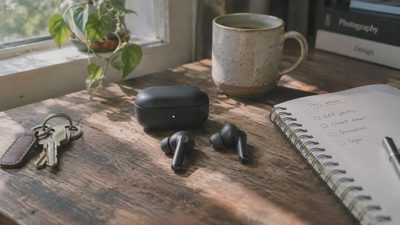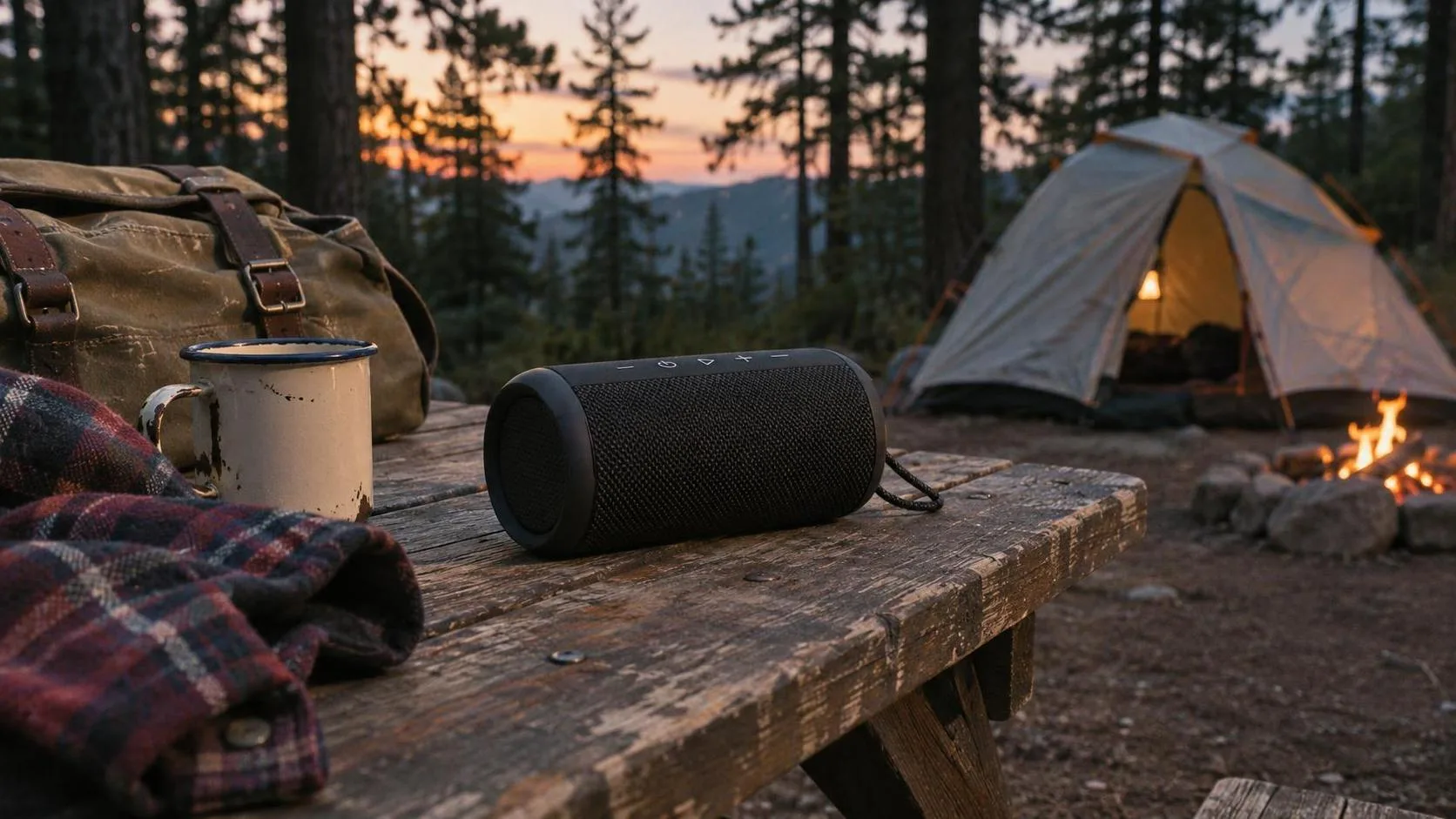
I have packed JBL speakers into bike bags, backpacks, and the back of a car for trips that ranged from a single overnight near the river to longer weekends farther from the city. The ones that actually got used shared a few traits: they survived the weather, lasted through the day without constant charging anxiety, and did not feel like a chore to carry once the trail or campsite was reached.
“Best” for outdoor use is not the same as “loudest” or “most features.” It is the combination of size, battery, water protection, and real carry comfort that matches the kind of trips you actually take. Here is how the current JBL portable range breaks down for adventures and camping.
Ultra-Light and Always-With-You: Go and Clip
When the priority is simply not leaving music behind, the smallest speakers win.
The Go series is the lightest option. It disappears into a jacket pocket or the smallest compartment of a pack. Battery life is modest but enough for a full day of light use. Water and dust protection is solid. Sound is limited—fine for close-range listening at a campsite or while cooking, not enough for a group around a fire.
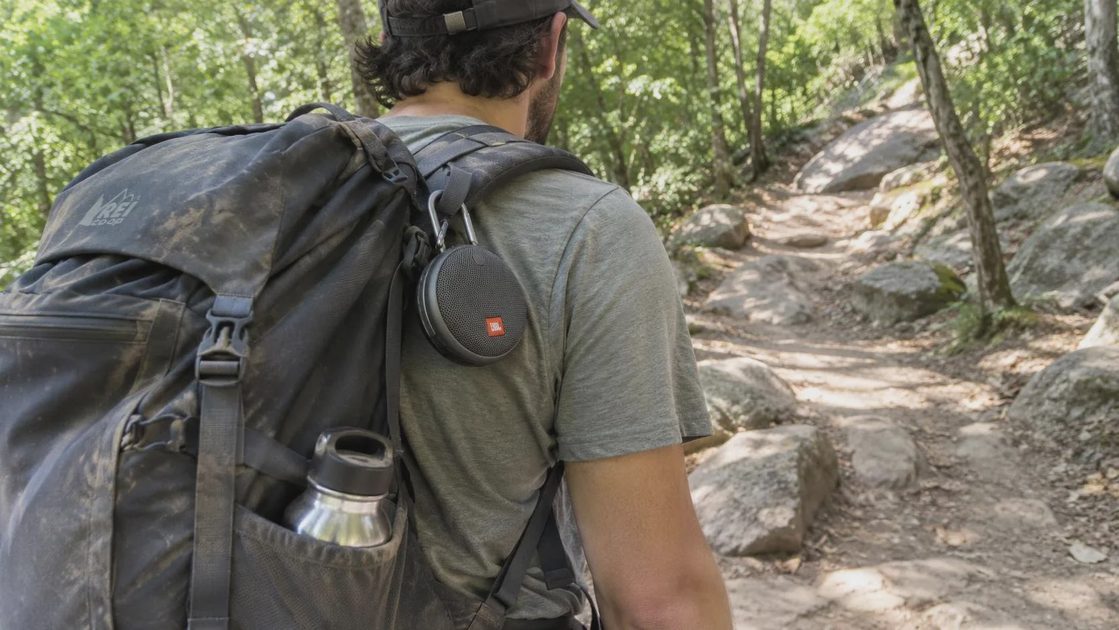
The Clip 5 adds the carabiner. That single feature changes outdoor usefulness more than the modest size increase. Clip it to a backpack strap, a belt, or the outside of a bike bag and it stays accessible without digging. Slightly longer battery and a bit more output make it the better of the two for hiking or cycling days.
These are secondary or solo speakers. They shine when weight and bulk are the enemy.
The Everyday Outdoor Workhorses: Flip and Charge
Most camping and adventure trips land in this range.
The Flip 7 remains easy to carry in a pack or tote while offering enough volume and battery for small groups at a campsite or day-use area. Strong water protection (IP68 on recent models) handles rain and splashes. It is the speaker I reach for when the trip is short, the group is small, and I still want something that can sit on a picnic table or rock without feeling fragile.
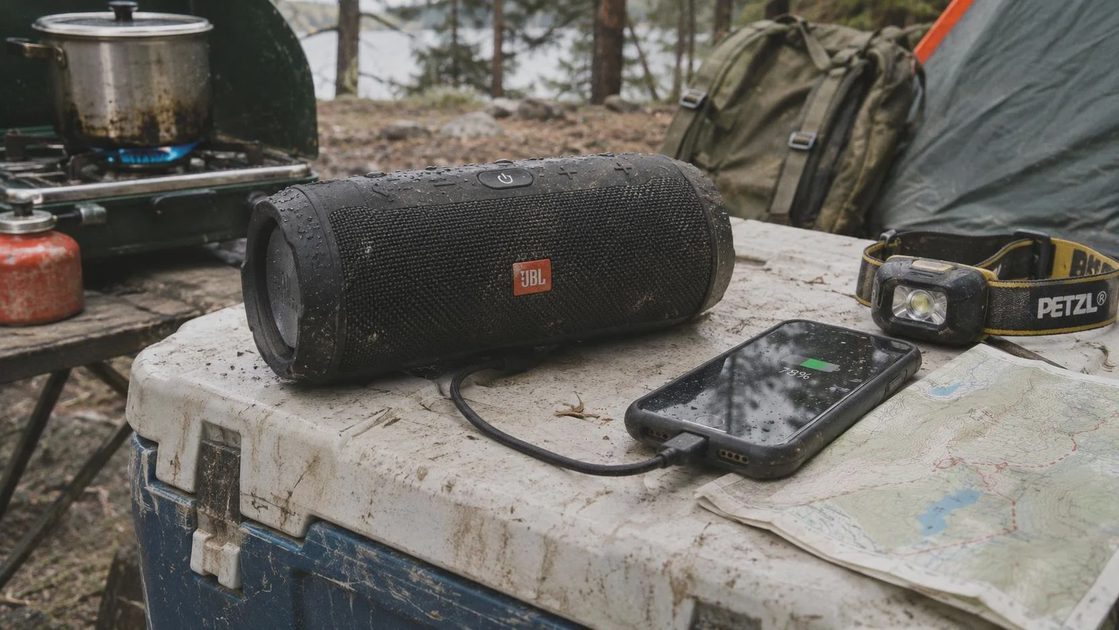
The Charge 6 steps up in battery life and output. Rated playtime is long enough for full days, and the USB port that can charge a phone has proven useful more than once when power banks were already low. It is heavier than the Flip but still realistic for car camping, established campsites, or trips where the speaker can ride in a vehicle or larger pack. In open outdoor spaces it holds volume better when conversation and ambient noise rise.
For the majority of car-camping and short adventure trips, one of these two covers the need. The Flip prioritizes easier packing. The Charge prioritizes endurance and the ability to top up a phone.
Bigger Sound for Basecamp and Group Camps: Xtreme
When the campsite becomes a base for a larger group or the speaker needs to fill a more open area, the Xtreme range makes sense. The shoulder strap turns the extra size into something one person can manage over moderate distances. Battery life is strong, water protection is solid, and the extra driver area delivers more bass and volume than the Charge without jumping all the way into PartyBox territory.
This is not a backpacking speaker. It is the one that lives in the car or at a drive-up site and becomes the center of evening listening. In my experience it earns its keep on trips where people gather in one spot for hours rather than moving constantly.
What Actually Matters Outdoors
Water and dust ratings (IP67 or IP68 on current portables) are useful, but they are not magic. Rinse the speaker after exposure to salt, sand, or muddy water and let it dry. Battery claims assume moderate volume; cold weather and higher levels reduce real-world numbers. A power-bank feature on the Charge series is more practical on multi-day trips than most people expect.
Weight and form factor decide whether the speaker gets packed at all. The most capable speaker is useless if it stays in the car because it feels like too much trouble to carry to the site.
Matching Speaker to Trip Type
Solo or ultralight days, bike packing, short hikes → Clip 5 (or Go if absolute minimum size is required)
Weekend car camping, small groups, mixed indoor-outdoor → Flip 7 or Charge 6
Longer basecamp stays or larger outdoor gatherings → Xtreme
Full party-scale outdoor events → PartyBox territory (separate decision)
I have left more than one “better on paper” speaker at home because it did not fit the pack or the day. The JBL models that keep coming on trips are the ones that balance enough sound and battery with a form I am willing to carry. Start with the kind of adventures you actually take, then choose the smallest speaker that still meets the need. That approach has produced far fewer regrets than chasing maximum volume.